What Do Orange Electrical Outlets Mean?
If you’ve ever noticed an orange electrical outlet, you’ve probably wondered why it looks different from the standard white or ivory receptacles around it.
Is it a special type of outlet? Does the color indicate a safety feature? And should you plug anything different into it?
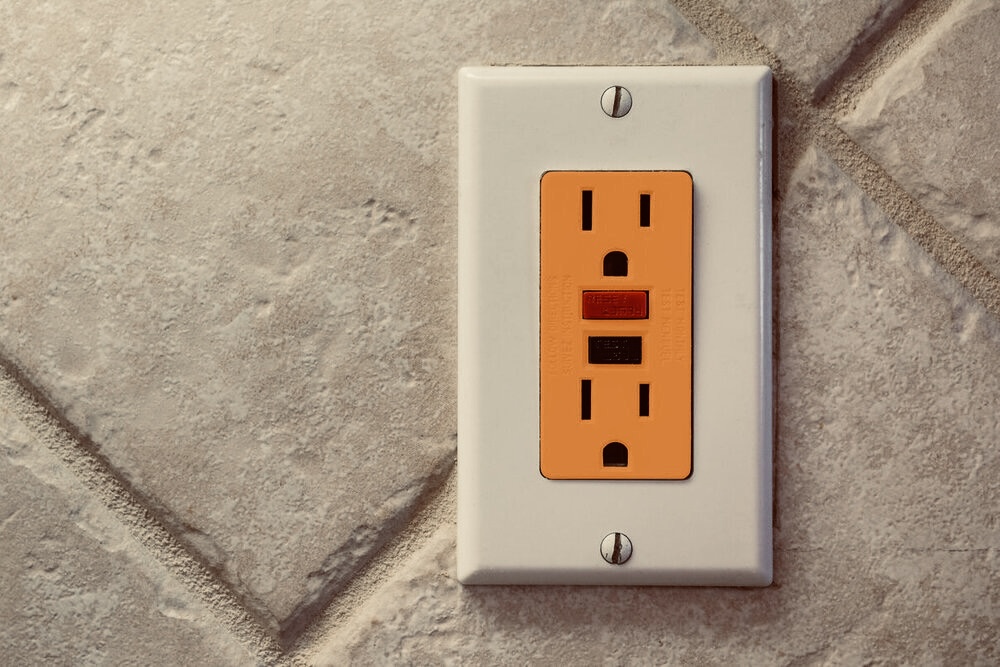
In many cases, an orange receptacle is an isolated-ground outlet. These receptacles are designed for situations where reducing electrical noise and electromagnetic interference is important, particularly when sensitive electronic equipment is involved.
That doesn’t necessarily mean an orange outlet is more powerful or safer than a standard outlet. Instead, the color makes a particular grounding arrangement easy to identify.
What Is an Isolated-Ground Outlet?
An isolated-ground receptacle has a grounding terminal that is isolated from the receptacle’s mounting hardware. It uses a separate insulated equipment grounding conductor that connects back to the appropriate grounding point in the electrical system.
The National Electrical Code recognizes isolated-ground receptacles and requires them to be identified. You may see the entire receptacle manufactured in orange, or you may see a different-colored receptacle with the identifying orange triangle.
Why Would a Building Need an Orange Outlet?
Isolated-ground receptacles can be useful anywhere sensitive electronic equipment needs a cleaner grounding path.
For example, they may be used with:
- Computers and networking equipment
- Audio and video equipment
- Laboratory equipment
- Certain industrial controls
- Electronic instrumentation
- Specialized equipment in commercial facilities
The goal isn’t to provide more electricity. It’s to help prevent unwanted electrical interference from affecting equipment that can be particularly sensitive to it.
In an office, for example, an isolated-ground receptacle may be part of an electrical system that supports computers and other electronic equipment. In industrial environments, similar receptacles can be used for sensitive control or instrumentation equipment.
Does Orange Mean the Outlet Is Safer?
This is one of the most important things to understand about outlet colors. You shouldn’t assume an orange receptacle provides a particular type of protection simply because of its color.
An isolated-ground receptacle has a different purpose from a GFCI receptacle, which protects from electrical shock by monitoring the electrical current and interrupting power when it detects a ground-fault condition.
An isolated-ground receptacle, on the other hand, is primarily concerned with the grounding path and reducing electrical noise. In other words, an orange outlet isn’t automatically a substitute for a GFCI outlet, surge protection, or another required form of electrical protection.
What About Orange Outlets in Medical Facilities?
Orange receptacles can also appear in healthcare environments, which can make their purpose especially confusing.
Some manufacturers offer orange isolated-ground receptacles that are also hospital-grade products. However, orange doesn’t mean “hospital outlet.” Hospital-grade receptacles have their own identification and performance requirements.
In fact, electrical requirements for healthcare facilities can be considerably more specific than those found in an ordinary home or office. Isolated-ground receptacles also have restrictions in certain patient-care areas.
Can You Plug Normal Equipment Into an Orange Outlet?
Generally, an isolated-ground receptacle can accept the same type of compatible plug as a standard receptacle with the same configuration and rating. The important consideration is the circuit, receptacle rating, and equipment requirements, not simply the color.
That doesn’t mean you should assume an unfamiliar orange outlet is interchangeable with every other receptacle, though. A receptacle’s amperage, voltage, wiring, and protective devices all matter.
If you aren’t sure what an unusual receptacle is connected to, it’s better to have an electrician identify it rather than making assumptions based on appearance.
What If You Find an Orange Outlet in Your Home?
Finding one in a house isn’t necessarily a problem. It may have been installed for a specific piece of equipment. However, if you’re buying an older home, remodeling, or making electrical changes, it’s worth understanding why the receptacle exists before replacing it with a standard outlet.
An electrician can determine:
- What type of receptacle it is
- How the grounding conductor is configured
- What circuit supplies it
- Whether the installation is appropriate for its intended use
- Whether any additional electrical work is needed
Simply swapping an orange receptacle for a white one removes an intentional visual indication, without addressing the reason the specialized receptacle was there in the first place.
Don’t Judge an Electrical Outlet by Its Color
Electrical receptacle colors can provide useful clues, but they’re not a substitute for understanding the circuit behind the outlet.
If you’ve discovered an orange outlet during a home renovation, you’re troubleshooting an electrical issue, or you’re simply curious about what a particular receptacle is for, Fischer Electric can help identify what you’re looking at and determine whether the installation is appropriate for your electrical system.
Have an unusual outlet or electrical feature you aren’t sure about? Contact Fischer Electric to have it professionally evaluated.